Nervous patients · Widney Dental, Knowle
Scared of the dentist? Start slowly.
Tell reception when you book and the first visit is paced for you: a conversation and a look, nothing done that you have not agreed to, a signal that stops everything, and, for treatment you would rather not be aware of, intravenous sedation given by a dentist who provides it in hospital. NHS and private patients alike.
In short
You are not the only one.
We see patients who range from nervous to outright terrified, and most of them have not been for years because of it. Nobody here will tell you off for that. The first appointment is for meeting the dentist, saying what worries you, and having a look; treatment, if any is needed, is planned at your pace and done only when you say so.
What helps
What we do, and what you can ask for.
Fear of the dentist usually comes from one bad experience, from the sounds, or from feeling out of control. Each of those has an answer.
What we do
- Time. A longer first appointment, so nothing is hurried and every question is answered; the fear of the unknown is usually the worst part.
- Information before action. The dentist tells you what is about to happen before it happens, every time, in plain words.
- A calm surgery, and dentists several of whom have a particular interest in anxious patients.
- Sedation for treatment you would rather not be aware of: intravenous sedation at £175 a session, given by Dr Mohammed Binamin.
- No judgement about how long it has been or the state of your teeth. We have seen it before.
What you can ask for
- Tell us you are nervous when you book. There is no need to be embarrassed, and it changes how the visit is planned.
- Come and look around before any assessment or treatment. Sitting in the chair with nothing happening helps more than people expect.
- A morning appointment, so you do not spend the day worrying.
- Bring a friend to steady your nerves; they can sit in.
- Agree a stop signal with the dentist, a raised hand, and everything stops when you use it.
- Music or an audiobook in your ears while treatment is done.
How it runs
Five steps, at your pace.
- 1
Tell reception
Call 01564 773080 and say you are nervous. Ask about NHS or private; a morning slot if you want one; a look around first if that would help.
- 2
The first visit
A conversation about what worries you and what has happened before, then a look at your teeth and gums, with x-rays only if you are happy. Nothing else is done.
- 3
The plan, at your pace
What was found, explained on the screen, and a plan in the order and at the speed you can manage: the small things first, or the thing that hurts first, as you prefer.
- 4
Treatment, your way
With the stop signal agreed, music if you like, and local anaesthetic given slowly. Or under intravenous sedation, drowsy and remembering little, with someone to take you home.
- 5
The next visit is easier
It nearly always is. Regular check-ups keep the work small, which is what keeps it easy.

Sedation
Drowsy, calm, and remembering very little.
Intravenous sedation is a sedative given through a small cannula in the back of the hand or arm. Within a minute or two you feel calm and heavy-limbed; you stay awake enough to respond, but time passes quickly and most people remember almost nothing of the treatment afterwards. Your breathing and oxygen are monitored throughout, and the local anaesthetic is given once you are sedated, so you do not feel that either.
It is given here by Dr Mohammed Binamin, who holds a diploma in conscious sedation and works as a senior specialty doctor in oral and maxillofacial surgery at Solihull Hospital. You need someone to bring you and take you home, and for the rest of that day you do not drive, work, or sign anything important. The sedation is £175 a session, on top of the treatment done under it.
What it costs
The visit, and the sedation.
The first appointment is an examination, on the NHS at the Band 1 charge or privately at the fee guide’s figure; being nervous does not change the price. Sedation is a private fee per session whichever way you are seen, because it is not routinely available in NHS general practice. Under-18s, pregnant women and new mothers, and people on certain benefits pay nothing for NHS treatment.
NHS figures are England’s band charges as nhs.uk publishes them; private figures are Widney Dental’s fee guide.
Three ways through treatment
Awake, sedated, or asleep.
Most nervous patients manage with the slow approach and local anaesthetic once they trust the dentist. Sedation is there for those who do not, and a general anaesthetic, which only a hospital can give, for the few who need it.
| What you feel | Who it suits | Cost here | Afterwards | |
|---|---|---|---|---|
| Awake, paced slowly | Numb where the work is; aware, with the stop signal and music | Most people, once the first visit has gone well | The treatment’s own fee | Drive home; back to the day |
| Intravenous sedation | Drowsy and calm; you respond but remember little | Longer treatment, surgery, or fear that the slow approach does not settle | £175 a session, plus the treatment | An escort home; no driving or work that day |
| General anaesthetic | Asleep throughout | A small number of people and some children, by referral to hospital | On the NHS at the hospital, where the referral is accepted | A hospital day, an escort, and a longer recovery |
If you are not sure which you need, say so at the first visit. Nothing is decided until you have met the dentist.
Who you will see
Dentists who chose this work.
Dr Mohammed Binamin gives the sedation, in the practice and at Solihull Hospital; Dr Amelia Reed’s background is oral surgery and sedation alongside hospital maxillofacial teams. Tell reception what you would find easiest and they will match you.
- Dr Mohammed BinaminPrincipal dental surgeon · sedation, oral surgery, implantsGDC 71019
- Dr Amelia ReedAssociate dentist · oral surgery and sedationGDC 194478
What patients say
In their own words.
A patient, on the why-us page★★★★★I have recently completed treatment for an implant at Widney Dental Care and although nervous at first and some initial discomfort at the beginning the whole process has been managed efficiently and professionally at all times. The care and attention to detail is second to none and the support during and after the treatment is reassuring. I am delighted with my implant.
Great support for nervous patients★★★★★I have recently completed treatment for an implant at Widney Dental Care and although nervous at first and some initial discomfort at the beginning the whole process has been managed efficiently and professionally at all times. The care and attention to detail is second to none and the support during and after the treatment is reassuring. I am delighted with my implant.
For the whole family★★★★★My family and I have been receiving treatment at Widney Dental Care for a number of years. I am grateful for the level of care I have received at this practice.
Quality care worth travelling for★★★★★I find this a first-rate practice in every respect. Efficiently run including first-class patient care and treatment. Having moved out of the area several years ago and having full confidence in my dental care and treatment I still remain a patient being more than happy to travel some distance for my dental care.
Google review★★★★★Adam takes great pride in his work, treating the fillings like a work of art.
Questions
Asked before people ring.
Why are people scared of the dentist?
For many reasons: an experience years ago, often as a child; the sounds and the smell; the feeling of lying back with someone working in your mouth and no control over it. Knowing which of those is yours helps, because each has a different answer, and the first visit is where we find out.
It has been years. Will you tell me off?
No. Most nervous patients have stayed away for years, and the state of the teeth when they come back is something we have seen many times. The first visit is a look and a plan, not a lecture.
Can I come in just to look around first?
Yes. Ring and ask; you can see the waiting room and a surgery, meet the receptionists, and sit in the chair with nothing happening. For many people that alone takes the edge off the first real appointment.
What if I need to stop during treatment?
Agree a signal with the dentist before anything starts, usually a raised hand, and everything stops when you use it, for as long as you need. Knowing you can stop is what lets most people not need to.
What is intravenous sedation like?
A small cannula in the back of the hand, then within a minute or two a calm, heavy, drowsy feeling. You can respond to the dentist but time passes quickly and most people remember almost nothing afterwards. You are monitored throughout, and you go home with someone who stays with you.
Is sedation safe, and who gives it?
Intravenous sedation in dental practice is given by dentists trained and qualified in it, with your breathing and oxygen monitored throughout, and it is one of the most established ways of treating anxious patients. Here it is given by Dr Mohammed Binamin, who holds a diploma in conscious sedation and provides sedation in hospital oral surgery as well.
How much does sedation cost?
£175 a session, on top of the fee for the treatment done under it. A first examination is £75 privately or the NHS Band 1 charge, £27.90.
Can I have sedation on the NHS?
Not routinely in general dental practice; sedation here is a private fee whichever way you are seen. For a small number of people, and some children, an NHS referral to hospital for treatment under sedation or a general anaesthetic is the right route, and we make that referral where it is needed.
Can I bring someone with me?
Yes, and for sedation you must: an adult to bring you, take you home and stay with you for the rest of the day. For ordinary appointments a friend can sit in if it steadies you.
Do you see nervous children?
Yes, including children who have never been to a dentist before. A first visit for a child is a ride in the chair and a count of the teeth, and children’s NHS treatment is free. Children’s dentistry explains the first visit.
Where are you, and when are you open?
76 Widney Road, Knowle, Solihull B93 9AW. Monday to Thursday 8.30am to 6pm, Friday 8.30am to 5pm. Call 01564 773080 and tell reception you are nervous, or request a call-back and mention it in your message.
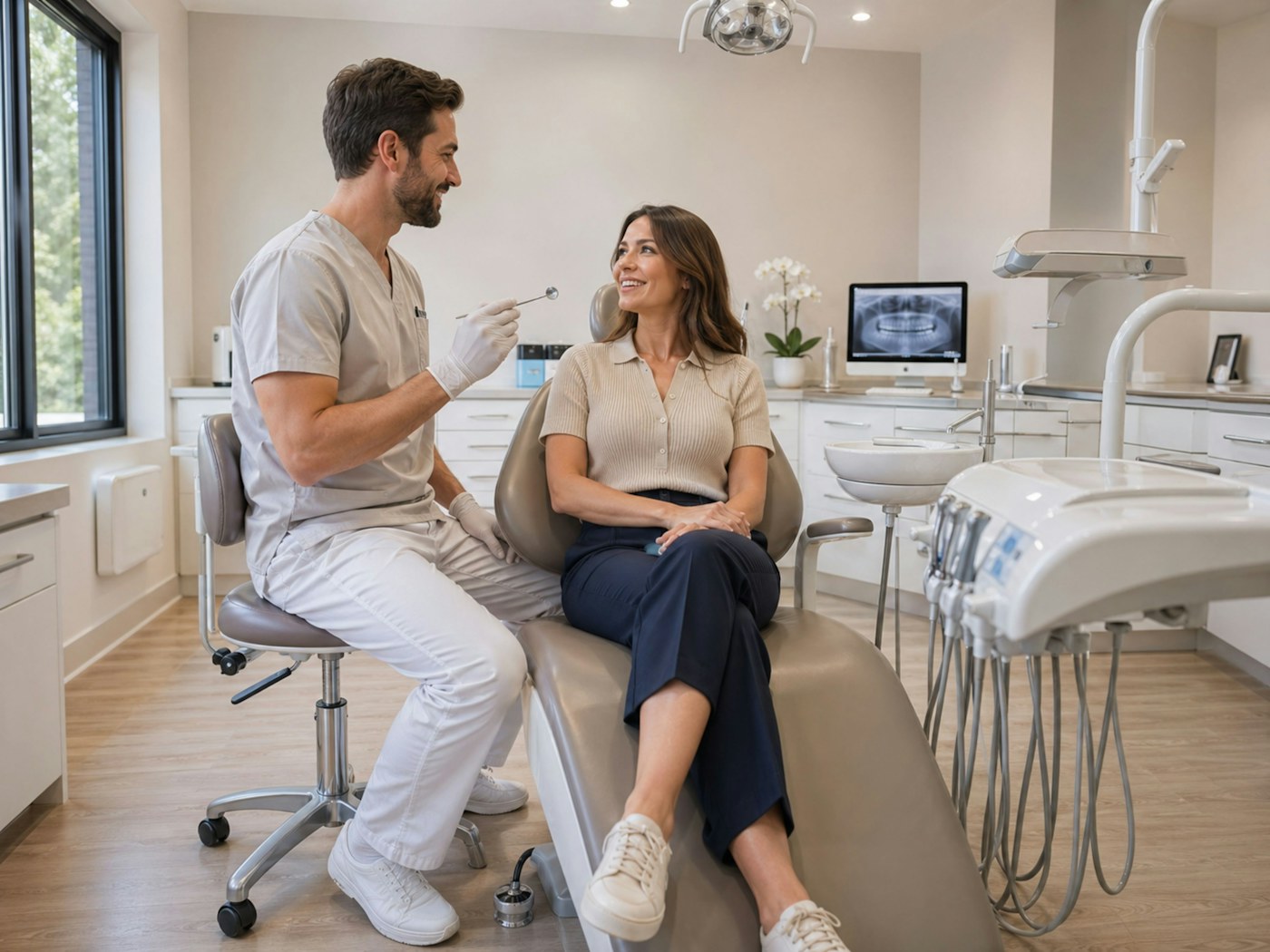
Ring, and say you are nervous.
That one sentence changes how the visit is planned. A conversation first, nothing done without your yes, and sedation if you want it.
Knowle, Solihull
B93 9AW
Friday 8.30am to 5pm